


As a globally recognized sustainability rating platform, EcoVadis continues to refine its assessment system, helping companies improve their sustainable competitiveness with greater accuracy and transparency. From 2024 to 2025, EcoVadis will introduce several significant updates to its scoring methodology, award system, assessment framework, and standard alignment, bringing both significant opportunities and challenges to businesses.
01 More Accurate Scoring
The previous scoring method, which rounded to the nearest ten, has now been changed to single-digit accuracy. This allows companies to more clearly identify subtle progress or shortcomings in the four major areas of environment, labor and human rights, business ethics, and sustainable procurement, allowing them to develop more targeted improvement strategies.
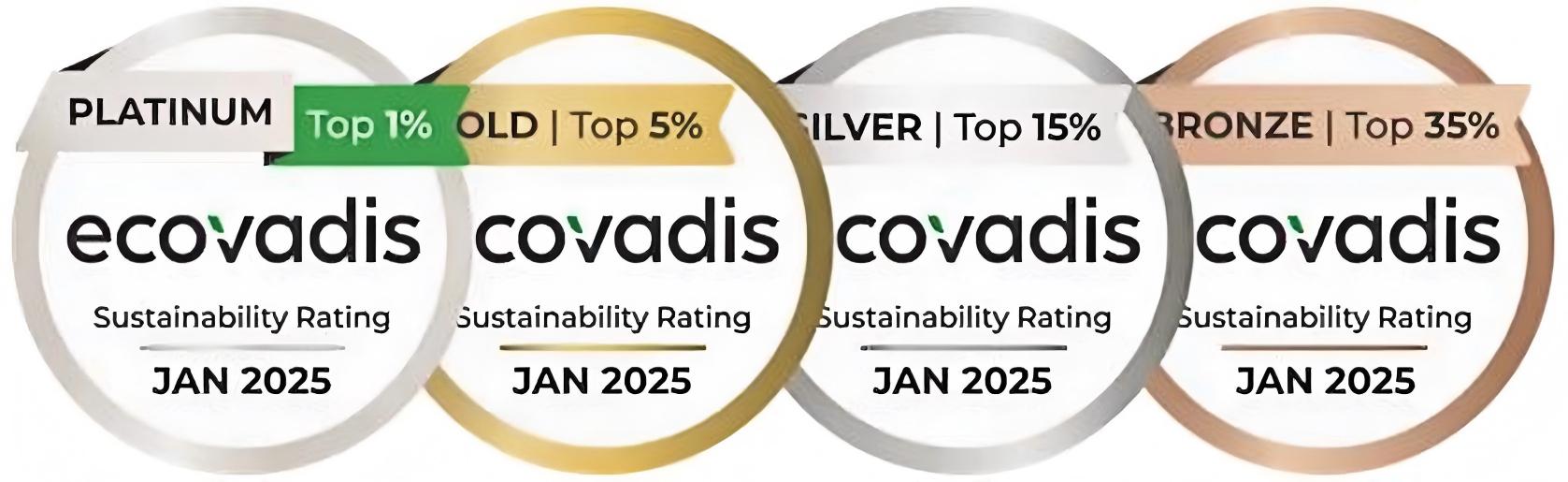
Medal Criteria:
Platinum: Top 1% (99th percentile ranking)
Gold: Top 5% (95th percentile ranking)
Silver: Top 15% (85th percentile ranking)
Bronze: Top 35% (65th percentile ranking)
Notes:
① If a score in any of the four themes falls below 30, the company is ineligible for the medal.
② 360° Observation indicator scores and negative cases will affect medal eligibility.
③ Companies operating in certain industries, such as tobacco product manufacturing, are ineligible for the medal.
02 Two New Badges
In 2024, EcoVadis added two new badges: Committed and Fast Mover. These will be awarded to companies that don’t score highly but demonstrate continued sustainability efforts or significant improvement.
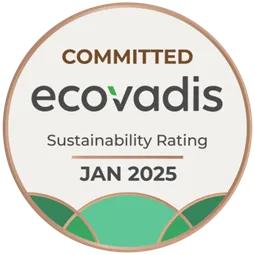
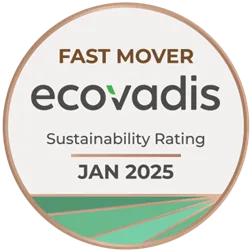
Badge Criteria:
Committed: A score of at least 45 (representing “good” performance in the EcoVadis evaluation methodology).
Fast Mover: A score of 34-44, representing an improvement of at least 6 points compared to the last evaluation within 18 months.
Notes:
① Companies that have received the EcoVadis Medal are not eligible to receive the EcoVadis Badge.
② Negative cases from 360° observations will affect the award.
③ Companies operating in certain industries, such as tobacco product manufacturing, are not eligible to receive the Badge.
[1] The above award system will be officially implemented in 2024 and will continue to be used in 2025, but the industry restriction will be expanded to include “unconventional oil and gas exploration and production.”
03 Assessment Framework More Relevant to Industry Realities
EcoVadis has further strengthened its industry adaptability by introducing more detailed indicators and options in areas such as sustainable sourcing, environmental standards applicability, and human rights risk assessment. For example, it has added assessment dimensions for sustainable raw materials such as palm oil and timber, and allows certain industries to voluntarily declare the applicability of environmental standards.
04 Strengthening International Standards Alignment
Companies can now submit reports compliant with the ESRS (European Sustainability Reporting Standards) or ISSB (International Sustainability Standards Board) standards as part of their assessment, with no penalty for EcoVadis. This will help companies reduce assessment costs and improve international compatibility.
Impact and Recommendations for Enterprises
While the new regulations provide clearer assessment feedback, they also place higher demands on enterprises’ evidence chain management and industry compliance capabilities. Enterprises are advised to:
(1) Systematically review documents related to sustainable development to ensure a complete evidence chain between policies, actions, and results;
(2) Focus on high-impact issues and conduct self-inspections and benchmarking in conjunction with industry standards;
(3) Make good use of the visual scales provided by EcoVadis to accurately allocate resources and achieve continuous improvement. The new EcoVadis 2025 regulations not only drive enterprises forward on the path of sustainable development, but also provide leaders with more visible recognition and market competitive advantages.